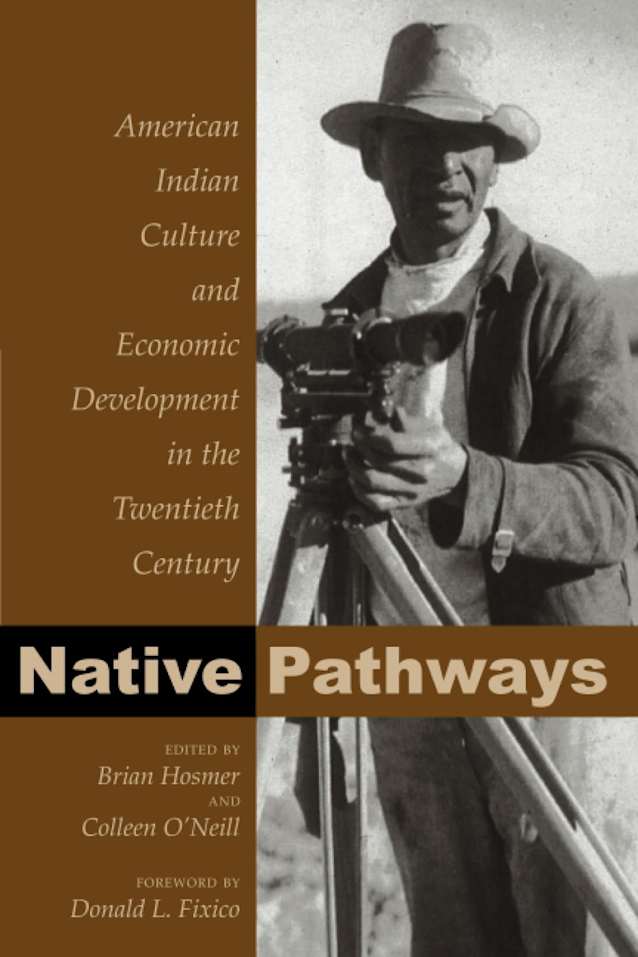
Native Pathways: Native American Culture and Economic Development in the Twentieth Century
About
How has American Indians' participation in the broader market—as managers of casinos, negotiators of oil leases, or commercial fishermen—challenged the U.S. paradigm of economic development? Have American Indians paid a cultural price for the chance at a paycheck? How have gender and race shaped their experiences in the marketplace? Contributors to Native Pathways ponder these and other questions, highlighting how indigenous peoples have simultaneously adopted capitalist strategies and altered them to suit their own distinct cultural beliefs and practices.
Praise for this book
"Federal policy makers and 'development' experts have steadfastly insisted that Native American cultural assimilation follows from heavy-handed manipulation of the tribes' economic bases. And Native cultures have in fact adjusted. But they have not assimilated. Brian Hosmer and Colleen O'Neill have edited an important collection of essays that examines this dynamic. The book's major theme is that imposed (and voluntary) economic changes often have strengthened, not erased, Native cultural identity. An important contributing factor to this result is a second theme: Natives have integrated work and economic development with other components of their own distinctive world views such as kinship and spirituality. . . . This anthology is clearly important for scholars of Native American life. Beyond that, it should be required reading for any nonacademics involved in Native 'development' and its policy infrastructure."